July 29, 2026
Member Spotlight: Direct Biologics
The Discipline Behind the Science
Scientific breakthroughs often attract the most attention, but turning complex biology into a therapy that can be consistently manufactured, rigorously studied and responsibly advanced requires an equally ambitious operational foundation. Direct Biologics is taking on that challenge through the development of investigational, cell-free, EV-enriched secretome products for serious immune and inflammatory conditions.
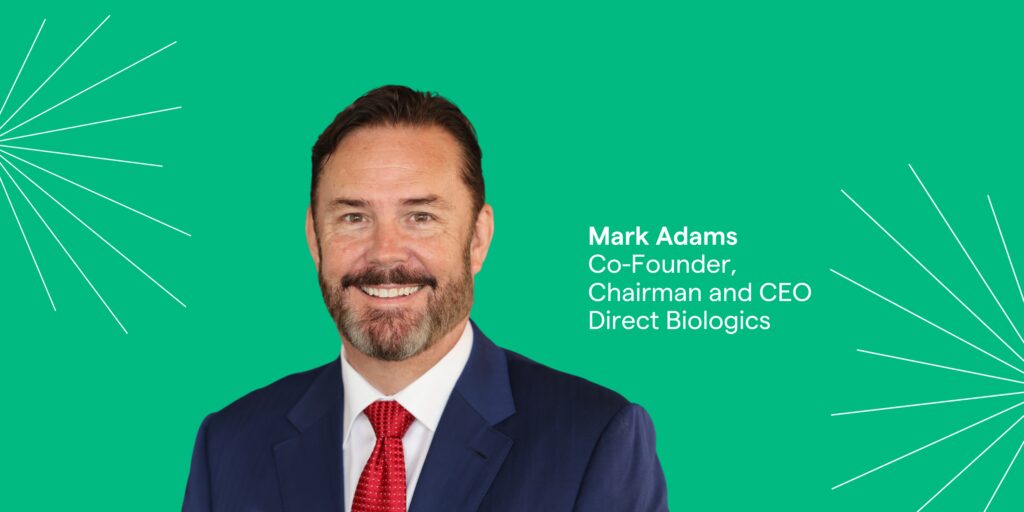
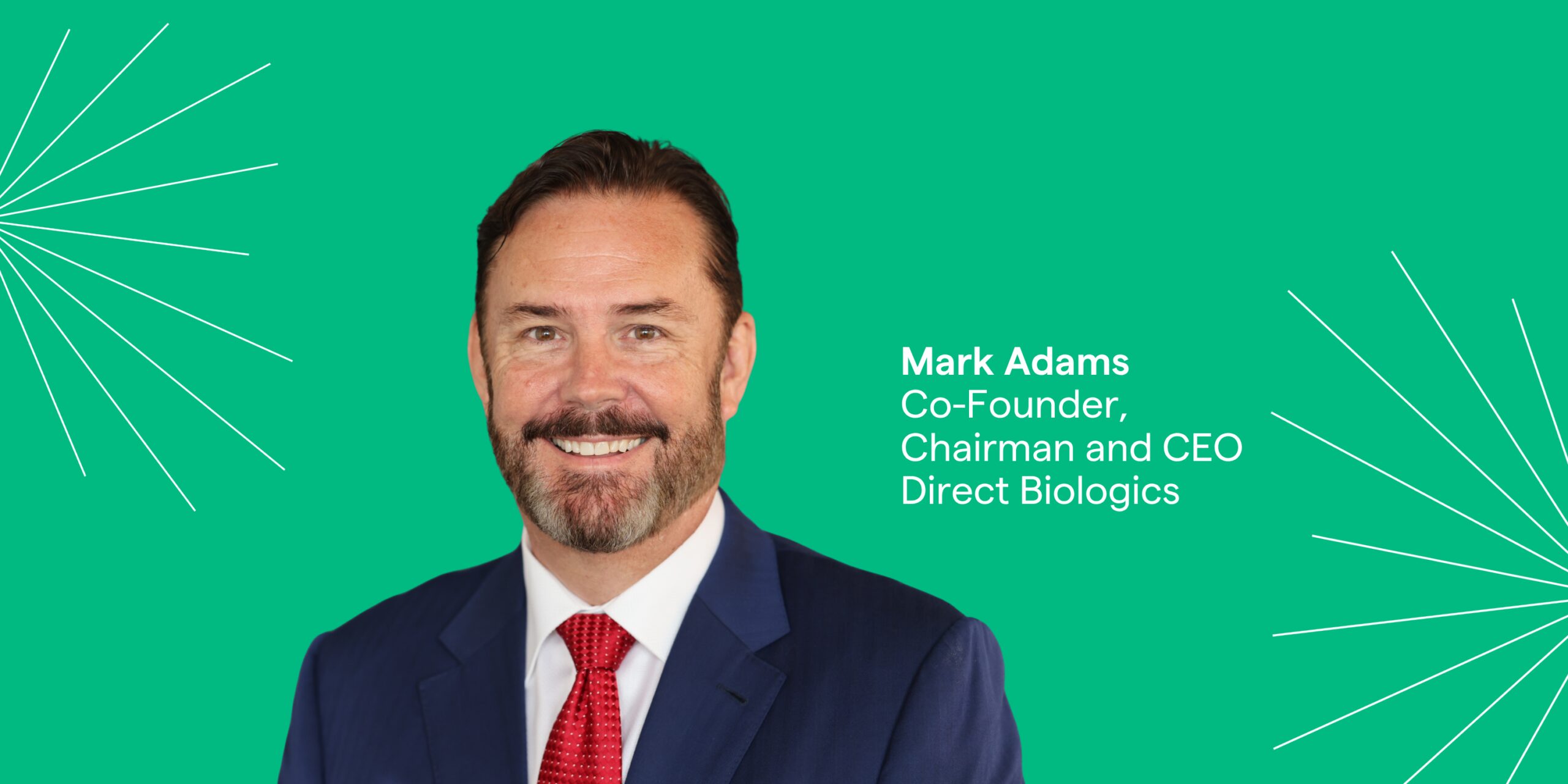
For co-founder, chairman and CEO Mark Adams, the opportunity lies in closing the gap between regenerative medicine’s potential and the infrastructure required to realize it. In this month’s member spotlight, Adams shares why quality and manufacturing discipline must begin on day one, how Direct Biologics is navigating the path from promising science to late-stage clinical development, and why meaningful progress in biotechnology often depends on the willingness to pursue difficult problems over many years.
You are a serial entrepreneur who has launched more than 25 companies across diverse industries. What inspired you to co-found Direct Biologics in 2017, and what unique challenges drew you to the regenerative medicine and biotechnology space?
I’ve started or backed more than two dozen companies across a range of industries, and by 2017 I was looking for something that would hold my attention longer than a typical build-and-exit. Regenerative medicine did that immediately, mostly because of the gap between the promise and the execution. There was, and still is, a lot of excitement about what stem cell biology could do for patients, but not nearly enough discipline around manufacturing, quality and clinical evidence. That gap looked less like a risk to me and more like the actual opportunity.
Joe Schmidt and I founded Direct Biologics to apply pharmaceutical-grade manufacturing, quality and regulatory principles (cGMP manufacturing, controlled clinical trials, real regulatory pathways) to a field that faced significant challenges involving standardization, manufacturing consistency and clinical validation. The scientific challenge appealed to me, too. We’re not working with a single molecule; we’re working with an investigational EV-enriched secretome, a complex mixture the body already produces, and trying to understand and manufacture it consistently enough to study it properly. That’s genuinely hard, and it’s exactly the kind of problem worth spending a decade on. Especially considering the persistent unmet need for novel therapies across immune and inflammatory conditions such as acute respiratory distress syndrome (ARDS). Nine years in, with a Phase 3 program and a growing pipeline, I’d make the same bet again.
It’s important to emphasize that our products remain investigational and have not been approved by the FDA. Their safety and efficacy have not been established. Our objective is to generate high-quality clinical evidence through well-controlled clinical trials while continuing to advance the scientific understanding of EV-enriched secretome products.
While traditional cell therapies have paved the way for regenerative medicine, Direct Biologics is pioneering a cell-free approach using extracellular vesicle (EV)- enriched secretome products. What do you see as the primary biological and clinical advantages of using secretome-based products over live stem cell transplants?
Direct Biologics is developing investigational EV-enriched secretome products derived from adult bone marrow mesenchymal stromal cells. Our investigational products are cell-free, meaning no living cells are transferred, and are free of DNA and nuclei. They contain naturally occurring biological components released by the cells, including EVs and other bioactive factors that continue to be studied. Because no living cells are transferred, this investigational approach may simplify certain manufacturing and storage considerations compared with living-cell therapies.
When we founded Direct Biologics in 2017, we believed the future of regenerative medicine would require more than promising biology. It would require the same scientific rigor, manufacturing discipline and quality standards expected of any modern biologic. Since then, we’ve focused on advancing the science of EV-enriched secretome products through pharmaceutical-grade cGMP manufacturing, advanced analytical characterization and rigorous clinical development designed specifically for these complex biologics. As one of the early companies dedicated to this field, we’ve also built a growing global intellectual property portfolio supporting the science, manufacturing and characterization of EV-enriched secretome products.
DB-2Q received FDA Regenerative Medicine Advanced Therapy (RMAT) product designation, reflecting the urgent need for new treatment options in ARDS. How has that designation shaped your Phase 3 EXTINGUISH trial design and regulatory pathway, and what does a cell-free, scalable investigational product mean for patient access within a trial setting?
Our ARDS program, DB-2Q (previously ExoFlo) received RMAT designation from the FDA in 2022 for COVID-19-induced ARDS, the same year we initiated our Phase 3 trial. RMAT is meant for regenerative medicine products addressing serious conditions with early evidence of promise, and provides more frequent, structured interaction with the FDA as a program moves forward. This is especially useful in a space where the regulatory pathway is not as well established as it is for small molecules. In 2023, the FDA agreed to expand the Phase 3 study to include classic moderate to severe ARDS.
As for patient access, a cell-free, cGMP-manufactured investigational product is designed to support standardized distribution to participating clinical trial sites. That matters in practical terms. Hospitals running a Phase 3 trial need a product that behaves the same way every time it arrives, without the viability constraints that come with living cells. It may seem like a small detail, but it’s the kind of detail that determines whether a trial can enroll at the pace it needs to.
Scalability and quality control are notoriously difficult hurdles in biological manufacturing. Can you share how Direct Biologics established its cGMP manufacturing standards to support the scalable production of adult bone marrow-derived mesenchymal stromal cell (MSC)-derived secretome products?
Getting cGMP-compliant production of an MSC-derived secretome right means controlling for the variability inherent in biologic manufacturing, standardizing collection and processing, and building analytical methods that can characterize a genuinely complex product. This isn’t a single well-defined molecule; it’s a mixture of vesicles and biomolecules, so the quality systems must be designed for that complexity rather than borrowed wholesale from more conventional biologics.
We’ve invested heavily in the infrastructure to do that consistently: a combined quality control and R&D laboratory in San Diego, opened in 2024, and an expansion of our manufacturing and quality systems in 2025. Bringing QC and R&D together in one facility was deliberate. It keeps the people doing the analytical characterization work close to the people making manufacturing decisions, which shortens the feedback loop considerably.
None of this is glamorous work, but it’s the foundation on which everything else rests. Without reproducible manufacturing, you don’t have a trial you can trust, and without a trial you can trust, you don’t have a company.
Your lead investigational candidate is currently being evaluated in a Phase 3 clinical study for classic moderate-to-severe ARDS. Which findings from your earlier clinical studies most influenced the decision to advance into a pivotal Phase 3 trial, and what key questions do you hope this study will answer?
The Phase 2 study generated data that supported advancement into Phase 3. This study was published in the prestigious medical journal, CHEST, in 2023 (164(6):1444-1453). The overall safety observations from Phase 2 informed the decision to continue clinical development. We completed that Phase 2 study in 2021 and initiated Phase 3 the following year. Phase 3 exists to answer the questions Phase 2 can’t: does this hold up in a larger, more diverse population, and is the effect strong and consistent enough to support regulatory review?
For us specifically, expanding the trial to classic moderate-to-severe ARDS in 2023 lets us ask whether the underlying trigger matters, or whether the investigational product demonstrates a consistent profile across patients with different underlying causes. That’s an important question clinically, because ARDS in practice is not solely a COVID-19 phenomenon. That’s precisely what a Phase 3 trial is for, and it’s why we designed this one the way we did.
Developing cutting-edge biological therapies requires careful navigation of evolving regulatory landscapes. How does Direct Biologics balance the urgency of bringing therapies to patients with life-threatening conditions like ARDS with the need for rigorous safety and clinical evaluation?
There’s real tension there, and I don’t think it’s honest to pretend otherwise. ARDS remains a serious condition with significant unmet medical need. That urgency is exactly why we started this company. If a program fails because it was rushed, patients lose access permanently, not temporarily. So, our approach has been to build the rigor early rather than bolt it on later.
We’ve done this by using cGMP manufacturing from the start, following a phased clinical trial structure that generates real safety and clinical data at each stage before advancing, and engaging closely with the FDA to support faster development. I think about it less as balancing urgency against rigor and more as recognizing that rigor is what makes urgency meaningful. An investigational product that reaches patients on a compressed timeline but without solid evidence behind it doesn’t actually solve the access problem. It simply moves the risk downstream.
How do you measure success in your work at Direct Biologics, both in terms of reaching clinical milestones and the broader impact your platform can have on human health and regenerative medicine?
There are three scoreboards I watch, and I try not to let any one of them crowd out the others.
The first is the clinical one: are we hitting the milestones that move DB-2Q and our GI programs through the phases they need to clear, on timelines and with data quality that holds up to regulatory scrutiny? Each milestone matters because they tell you honestly where you stand.
The second scoreboard is whether we’re building something that becomes stronger over time. Are our manufacturing, quality and scientific capabilities more advanced than they were two years ago? Is our intellectual property portfolio continuing to mature? Is each discovery helping inform the next investigational program? Success isn’t defined by a single clinical readout. It’s measured by whether we’re creating an investigational platform that becomes more capable, reproducible and valuable with every step forward.
The third scoreboard is our people. None of those milestones happen without a team aligned around the same mission. I want Direct Biologics to remain a place where talented people work collaboratively, challenge one another constructively and stay optimistic about what we’re building together. Human capital is ultimately what turns good science into meaningful progress, and maintaining that culture is every bit as important as achieving the next milestone.
Ultimately, success for me is when those three scoreboards are moving in the same direction: advancing our clinical programs responsibly, strengthening the platform for the future and building an organization capable of sustaining that progress over the long term.
Beyond pulmonary indications, your pipeline includes clinical programs for perianal fistulizing Crohn’s disease and medically refractory ulcerative colitis. What makes your investigational therapies well suited to treat these severe, localized inflammatory conditions of the gastrointestinal tract?
Our development strategy has always been driven by science and supported by clinical investigation. We selected perianal fistulizing Crohn’s disease and medically refractory ulcerative colitis because both represent areas of significant unmet medical need and warrant continued scientific investigation. While our core manufacturing platform and analytical capabilities support multiple indications, each program is developed independently, with its own clinical objectives, study design and regulatory pathway. Our focus remains on generating the evidence needed to evaluate the safety and efficacy of our investigational products in each patient population under study.
Direct Biologics was built on the premise that modulating inflammation can address multiple unmet global markets. How has this foundational focus on immune and inflammatory pathways shaped your long-term corporate strategy and product pipeline?
Over nearly a decade, we’ve invested in the capabilities required to advance this field responsibly. That includes pharmaceutical-grade cGMP manufacturing, advanced analytical characterization, AI-enabled multiomics, expanded research and quality infrastructure and a growing global intellectual property portfolio that includes issued patents and pending patent applications supporting our investigational platform. Together, these investments have enabled us to advance a Phase 3 clinical program in ARDS while expanding into additional investigational programs in inflammatory bowel disease and continuing to deepen our scientific understanding of EV-enriched secretome products. ARDS was our starting point because it represents one of the most severe inflammatory conditions in medicine and an area of significant unmet medical need. From the beginning, however, our vision extended beyond a single investigational program. We set out to build the scientific foundation for an emerging class of investigational biologics. That philosophy has guided us since we founded Direct Biologics in 2017.
Lastly, drawing from your extensive background as both an entrepreneur and a biotech leader, what advice would you offer to young professionals preparing to enter the life sciences industry today
Get comfortable with problems that don’t have a clean textbook answer. Biology is messy, and regenerative medicine is still figuring out its own rules. Things like manufacturing standards, regulatory pathways and characterization methods are more established elsewhere in the industry but are still being built here in real time. That can be frustrating if you want certainty, and it’s genuinely exciting if you don’t.
Second, don’t let the pace of biotech make you sloppy about the fundamentals. Quality and manufacturing discipline aren’t always the most interesting part of the work, but they are what determines whether the interesting part, the actual science, ever reaches a patient. I’ve watched plenty of promising science go nowhere because the infrastructure around it wasn’t built to survive scrutiny.
Third—and this is less about biology than about how I’ve approached every company I’ve started—be willing to spend years on problems that don’t pay off quickly. We founded Direct Biologics in 2017 and reached Phase 3 five years later. That’s a long runway by most startup standards, and it’s normal in this field. If you need fast validation, this industry will be a difficult fit. If you can accept slow, compounding progress, it’s one of the most meaningful places to spend a career.