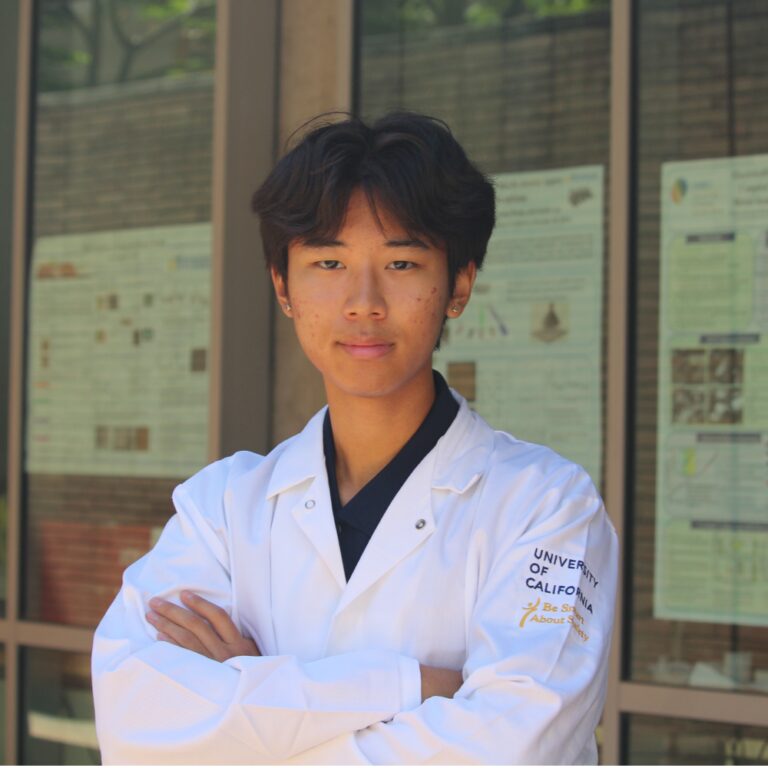
Poster #106, University of California, Riverside
Characterization of an Automated Polymerization System for Printing of Emulsion-based Scaffolds
Mentors: Kevin Dalsania (Grad Student); Dr. Iman Noshadi (PI)
Tissue engineering integrates biomaterial scaffolds with stem cells to help address challenges in regenerative medicine. Fabricating scaffolds with surface topography that emulates stem cell behavior is critical to advancing this field. A promising approach to achieving these required structural features is the microfluidic printing of BIPORES (Bijel-Integrated PORous Engineered System), which has been previously used to support the proliferation and differentiation of neural stem cells. It is fabricated using a microfluidic device and a precursor solution to create a controlled emulsion, which is then polymerized into a rigid structure via UV light. However, one limitation with current fabrication methods is the reliance on unstable, manually controlled UV polymerization, which creates large margins for error. Thus, to address this limitation, this study moves toward an automated, computer-controlled system that consistently and precisely regulates UV exposure during microfluidic printing. This study aims to optimize UV polymerization frequency and exposure duration during microfluidic printing, ensuring scaffold stability while preventing structural defects from excess or insufficient material polymerization. This allows for the fabrication of constructs that maintain the ideal surface topography for cell adhesion while remaining structurally stable. To achieve this, multiple bijel constructs were printed with varying UV exposure times and layer intervals. The resulting constructs were analyzed with scanning electron microscopy (SEM) to identify the polymerization condition that yielded the most stable and structurally ideal conditions. By optimizing the reliability of the polymerization process, this study enhances the reproducibility of a promising scaffold platform for future tissue engineering applications.