March 26, 2026
Member Spotlight: BrainChild Bio
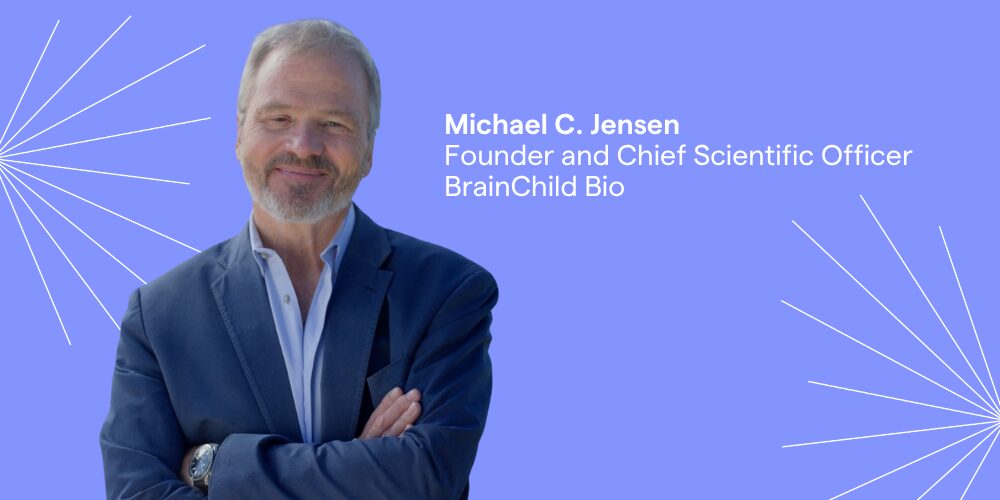
Your experience spans startup biotechs and major pharma. What drew you to lead Brainchild Bio at a time when CAR-T therapies face unique scientific and clinical hurdles in CNS tumors?
Prior to launching BrainChild Bio, I spent nearly three decades in academic medicine as a physician-scientist developing cellular immunotherapies for pediatric cancers, and also co-founded Juno Therapeutics and Umoja Biopharma. From my lab’s R&D emerged the prototype CD19 CAR T product that was eventually commercialized as Breyanzi. Over the past 10 years, my research at Seattle Children’s has focused on CAR T therapies for solid tumors, including multiple first-in-human Phase I trials evaluating new CAR solid tumor targets (such as B7-H3, L1-CAM and EGFR806), as well as multi-specific products and manufacturing and selection innovations. While solid tumor immunotherapy often targets kilograms of tumor in anatomically diverse locations, brain tumors require eliminating grams of localized tumors within the blood brain barrier. I view CNS locoregional CAR T therapy as a unique opportunity for CAR T solid tumor clinical success. The move to BrainChild Bio was driven by what we observed in DIPG patients, a disease that has not improved beyond palliative radiation. If we can treat DIPG safely and effectively, it opens the door to treating other brain tumors and brain metastases.
BrainChild Bio was spun out of Seattle Children’s with deep translational research roots in CNS immunotherapy. How has this scientific pedigree shaped the company’s vision and the way you approach clinical development for CNS disorders?
At the time of BrainChild Bio’s launch in 2024, the academic program had amassed over a decade of R&D development across new solid tumor CARs, multiplex strategies to address tumor heterogeneity and escape, synthetic biology-inspired potency enhancements, and manufacturing advances. These capabilities were shaped not only by preclinical work, but also by human data from multiple Phase I trials. Notably, our B7-H3 trial in children with DIPG demonstrated strong tolerability as an outpatient therapy, along with overall survival durations significantly exceeding the historical mean of 11 months. Some participants remain alive more than 5 years after enrollment. As a result, BrainChild Bio launched with a commercial candidate for pediatric DIPG ready for a pivotal trial, along with a technology platform that can be applied to glioblastoma and brain metastasis programs.
CAR-T therapies have transformed blood cancer treatment, yet applying them to solid CNS tumors comes with distinct biological barriers. Can you explain what makes the CNS environment particularly challenging and how BrainChild’s platform addresses these obstacles?
A major challenge for CAR T therapy in brain tumors is achieving sufficient T cell access and expansion in the CNS after intravenous delivery. Without tumor antigens outside the CNS to drive activation, CAR T cells struggle to accumulate in brain tumors. We address this through locoregional delivery, administering cells directly into CSF pathways using an Ommaya reservoir device. In over 100 patients, we have safely delivered repeated doses of up to 100M cells with only minor side effects and no detection of broad neurotoxicity. Moreover, CAR T cells remain localized within the CNS after intracranial dosing, allowing us to target tumor antigens not expressed elsewhere in the body. We also observe effective tumor homing of CAR T cells from the CSF pathways, as gliomas and other tumors often express chemokines such as CCL2 that guide CAR T cells through the brain. This combination of localized delivery, limited tumor burden and controlled trafficking creates a distinct therapeutic paradigm for CNS tumors compared to systemic solid tumor approaches.
Your platform integrates multiplexed targeting to address tumor heterogeneity in the CNS. How does targeting multiple antigens simultaneously help prevent tumor escape and resistance, especially in aggressive tumors like diffuse intrinsic pontine glioma (DIPG)?
Monospecific tumor targeting can lead to therapeutic resistance, as tumor cells lacking sufficient target antigen expression can escape. This is especially relevant in malignant gliomas that exhibit significant gene expression heterogeneity, particularly after external beam radiation. Multiplex CAR T targeting adds activation epitopes, enabling elimination of tumor cells that may not express the full array of cell surface target antigens, and addressing both inter-patient antigen expression heterogeneity and intratumor heterogeneity. BrainChild Bio is also evaluating combinations of CAR targets that are critical to the malignant biology of gliomas, such that tumor cells failing to express all targets may be rendered non-viable or unable to execute malignant behavior. We are currently focused on four key CAR T targets: EGFR, B7-H3, IL13Ralpha2 and HER2. Seattle Children’s BrainChild-04 Phase I trial is evaluating a product expressing all four CARs. To date, no safety signals suggest multiplexed products increases toxicity compared to single CAR constructs. Importantly, BCBio’s platform enables us to mix and match CAR targets from our portfolio to develop tailored applications to brain metastases, which affect over 200,000 cancer patients annually in the US, carry dismal prognoses and are often treated with highly toxic applicative treatments such as whole brain radiation.
Frontier technologies like synthetic transgenes are used to augment CAR-T potency within the immunosuppressive CNS microenvironment. Could you describe how these genetic enhancements work and why they’re important for durability and efficacy?
Potency enhancement of CAR T cells is a broad area of opportunity to overcome the adverse immunobiology of solid tumors. BrainChild Bio’s has been largely agnostic to the class of synthetic transgene, provided it is of human origin. We have assembled a library of 80-90 candidate transgenes, including modified transcription factors, signaling kinases, phosphatases, switch receptors, chimeric cytokine receptors as well as dominant-negative and constitutively active variants. Candidate selection was achieved through simultaneous competitive screening in primary human T cells co-expressing a reference CD19CAR, using assays such as killing, cytokine secretion, proliferation, differentiation, metabolic fitness and gene expression signatures. Several candidates rose to the top across multiple functional domains in both CD4+ and CD8+ T cells and showed potency enhancement in orthotopic glioma models. BCB-214, BrainChild Bio’s second product development program for glioblastoma, incorporates a potency-enhancing transgene consisting of a PD1 extracellular domain fused to a truncated inflammasome MyD88 into an expression vector that directs a multiplexed CAR set for EGFR, B7-H3, and IL13Ralpha2. Animal modeling indicate dramatically enhanced efficacy without adverse toxicity, with the potential to reduce cell dose and dosing frequency compared with non-enhanced products.
BrainChild Bio is exploring repetitive cerebroventricular dosing via implantable delivery systems. What insights led to this delivery strategy, and how might it improve therapeutic outcomes compared to traditional systemic approaches?
In contrast to ex vivo CAR T delivery via intravenous administration after lymphodepleting chemotherapy, which requires massive proliferation of transferred cells in a single cycle, we have pursued repetitive dosing of CAR T cells into the CSF. In this context, CAR T cells behave more like a drug, exhibiting predictable dose-dependent concentrations and half-lives in the CSF, likely reflecting the distinct immunobiology of the brain. This observation that cell dose determines engraftment magnitude is likely critical for safety, while the ability to dose repetitively for a prescribed area under the curve of tumor exposure to bioactive CAR T cells contributes to anti-tumor potency. We have clinically tested products delivered either systemically after lymphodepleting chemotherapy or directly into the CNS without lymphodepletion. CNS administration was clinically safer, awith minimal severe adverse events even upon repetitive dosing, whereas IV delivery was associated with CRS, ICANS and in some cases, MAS. Across more than 1,000 intracranial doses in Phase I trials at Seattle Children’s, we have not observed neurotoxicity syndromes seen in leukemia/NHL patients. Inflammatory changes are confined to tumor sites, and we do not observe CAR T egress into systemic circulation, likely due to tumor-restricted antigen expression and the absence of lymphodepletion-driven systemic engraftment.
Your lead candidate, BCB-276 (a B7-H3-targeted CAR-T), is positioned for a pivotal Phase 2 trial. What have you learned from earlier clinical experiences that’s informed how you’re designing this next phase for CNS tumor indications?
Based on results from the Seattle Children’s BrainChild-03 Phase I trial exploring a B7-H3 specific second-generation CAR in children with DIPG, we observed an excellent safety profile allowing for outpatient treatment, along with a compelling increase of mean overall survival from 11 months to 19.8 months, with several participants surviving 3-5 years following study participation. Accordingly, our lead program is focused on securing FDA approval of BCB-276 for this indication. In the BC-03 trial, long-term survivors were those treated after palliative radiation therapy, but prior to tumor progression. The pivotal Illuminate trial will focus on these patients, positioning BCB-276 as part of upfront standard of care for all children diagnosed with DIPG. While the Phase I trial evaluated cell doses between 10 and 100M with variable dosing schedules, the pivotal trial will have a set regimen of 15 doses delivered every two weeks. An additional key objective is the use of CSF proteomics and cell-free DNA analytics to establish quantitative molecular surrogates for tumor burden, given the ambiguities of neuroimaging of DIPGs in the context of immunotherapy.
Diffuse intrinsic pontine glioma (DIPG) remains one of the most devastating pediatric CNS diseases with limited treatment options. How does BrainChild Bio balance urgency with the need for rigorous safety evaluation in this vulnerable patient population?
Pediatric DIPG is a horrific disease with no curative therapies. Parents of these children get the diagnosis and the news that there is no cure all at once. I believe we can break this impasse with an effective therapy that does not impair their future human potential. If BrainChild Bio had launched with only preclinical data, we would be facing years of incremental Phase I testing. Instead, we have a large and robust Phase I dataset with remarkable safety data. We have received Breakthrough and RMAT designations from the FDA and are on the cusp of submitting our BLA-enabling multisite Phase 2 IND. Our lentiviral vector and manufacturing processes have transitioned to commercial-grade systems. This foundation allows us to move with urgency while maintaining the highest possible safety standards for these children.
How do you measure success in your work at BrainChild Bio, both in terms of company milestones and the broader impact your products have on society and human health?
At BrainChild Bio, our ethos is to target the most pressing tumors that take the lives of children while also developing life-saving treatments for adults, including GBM and brain metastases. Our challenge is to create synergies where advances in larger adult oncology markets can help accelerate progress for orphaned rare pediatric cancers.
Lastly, what advice would you offer to young people preparing to enter the industry today?
Ahh, I am tempted to say, “if you are young and entering biotech, you may want to steer away from advice from a grey-haired exec who has been around for 30 years”. Times have changed! I would encourage gaining an intimate understanding of what biotech needs right now and honing your skill sets accordingly. At the same time, recognize those needs will change over your career and you will need to adapt to the changing environment. Rather than focusing on being the best in a single narrow discipline because you love it so much, it is important to stay flexible, as areas of focus can become obsolete in the blink of an eye.