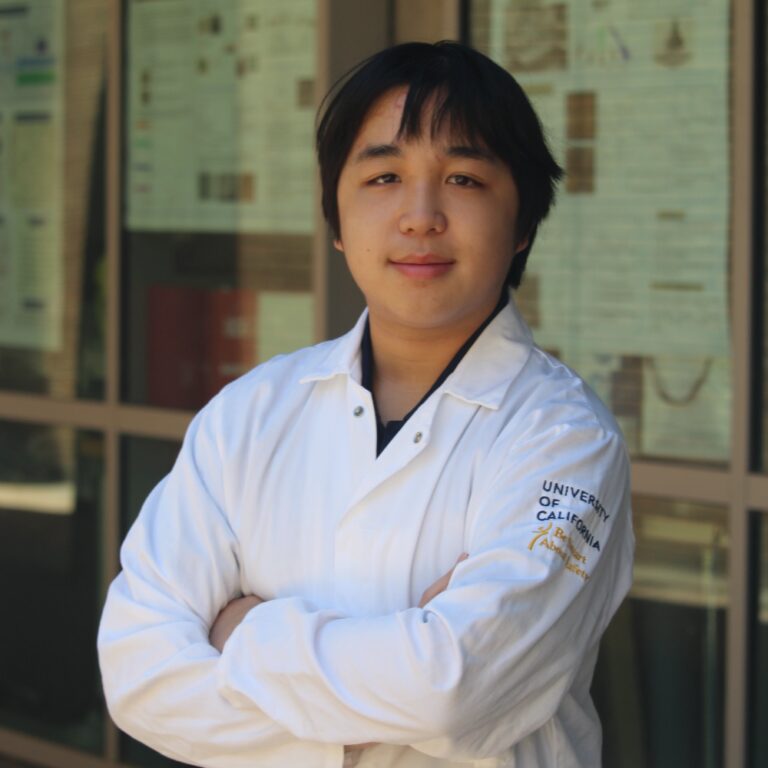
Poster #107, University of California, Riverside
Maximizing Concanavalin-A Binding Within Various Solutions
Mentors: Xinye Chen (Graduate Student); PI: Dr. Ke Du (Associate Professor, Chemical and Environmental Engineering Department)
Isolating life-threatening bacteria within a sample such as multidrug-resistant E. coli is crucial for patient survival. However, affordable culture-based techniques are limited by the potential for human error and the time required to obtain results before appropriate treatment can be initiated (Al-Daghistani et al., 2025). Optimizing the detection and diagnosis period is key, especially for resource-limited point-of-care locations. Concanavalin-A (ConA) is a protein that has binding capabilities with certain sugars, commonly found on external cellular structures. (AAT Bioquest, 2024). When applied to magnetic beads, a controllable pellet is created—originally combined with mammalian cells—which could be utilized for isolation purposes when combined with machinery. This study aims to specifically analyze the efficiency of ConA magnetic beads capturing E. coli. Solutions were prepared in which the volume of certain substances varied. Results were measured by evaluating the supernatant, using a microplate fluorometer. Samples containing higher volumes of buffer containing calcium and manganese ions successfully attracted more bacteria, herein affirming that they are necessary for ConA binding. Test groups with an increased concentration of beads faced insignificant fluorescence changes when compared to samples with less, possibly due to bead saturation. More work must be done in order to fully understand and maximize capture rate.