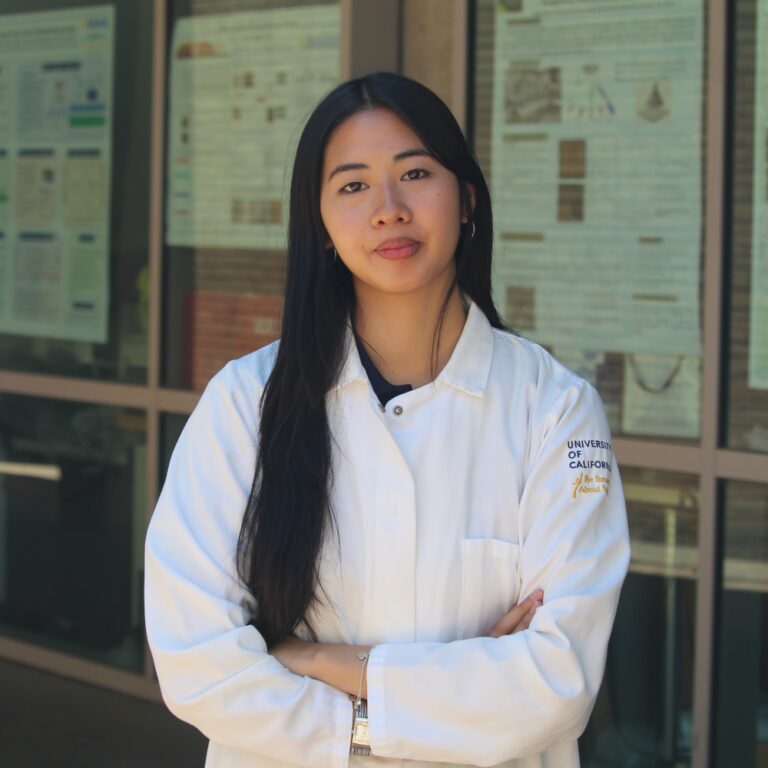
Poster #109, University of California, Riverside
Engineering Safer Scaffolds: A New Processing Method to Improve the Biocompatibility of Surfactant Laden Scaffolds
Mentors: Kevin Dalsania (Grad Student); PI: Dr. Iman Noshadi
To address critical challenges in regenerative medicine, tissue engineering utilizes stem cells and scaffolds to create functional artificial tissues. Creating more functional scaffolds that allow for better interactions with stem cells is an important path to advancing this field. These scaffolds must include structural features to support stem cell behaviors like adhesion, migration, proliferation, and differentiation. A promising option is BIPORES (Bijel-Integrated PORous Engineered System), previously introduced by our lab, which features the unique structure required to support the growth and function of neural stem cells. BIPORES is fabricated using a controlled emulsion stabilized by silica nanoparticles coated with hexadecyltrimethylammonium bromide (CTAB). However, excess CTAB within BIPORES constructs is cytotoxic, resulting in reduced cytocompatibility of the scaffolds. Ethanol and heat can be used to extract excess CTAB; however, because 95% ethanol has a low boiling point (~80 °C), the amount of heat we can use to remove CTAB is limited. To address this, we examine if using a sealed reactor to prevent ethanol evaporation while raising the temperature to 120°C removes a greater amount of CTAB and is a viable method to process these constructs. After processing the constructs, we allowed the scaffolds to leach CTAB into PBS (Phosphate-Buffered Saline) for five days and quantified the amount using an Orange II spectrophotometric assay. This quantification determined that the reactor treatment successfully lowers CTAB concentrations and is a viable option to help make BIPORES scaffolds more usable. This work advances the usability of a promising scaffold system, progressing the field of tissue engineering as a whole.